

 OSHA & ANSI Headers
 Safety Tags
 Parking Signs
 Braille Signs
 Engraved Plastic Signs
 Create From Scratch
 Braille Sign Templates
 Engraved Sign Templates
 Pipe Markers & Labels
 NFPA 704 Hazmat Signs
 Blank Write-On Signs & Labels
 EZ Make Printable Products
 Banners
 Floor Signs
 Projector Signs
 Tags
Tags
 Labels
 Digital Signs















Decoding Traffic Signs: Understanding Colors, Shapes and Symbols

Traffic signs communicate important information about roadway conditions, traffic regulations, hazards, and driver responsibilities. Understanding traffic sign meanings helps drivers react quickly, follow traffic laws, and navigate roads safely. Whether you’re learning about traffic sign colors, road sign shapes, or common roadway symbols, each design element serves a specific purpose.
To make it easy for people to understand roadway sign meanings, the U.S. Department of Transportation (DOT) established a universal set of traffic sign guidelines. These guidelines help drivers quickly and accurately interpret road signs, even at high speeds. This is especially important considering language barriers and vision deficiencies that can complicate the interpretation of these important signs.
To overcome these challenges, the DOT Federal Highway Administration designates symbols for traffic signs instead of words. Pictograms and symbols are easier to recognize and understand, and they can bridge the language gap. Symbols are becoming the standard for traffic control signs worldwide.
Understanding the meanings of roadway signs can be as simple as recognizing the colors, shapes and symbols on the sign. The colors of road signs play a critical role in conveying information. For example, red is used for stop, yield and prohibition signs, while yellow is used for general caution. The Manual on Uniform Traffic Control Devices (MUTCD) outlines road sign color standards, ensuring consistency throughout U.S. roadways.
The Three Elements That Determine Traffic Sign Meaning
Most traffic signs communicate information through a combination of color, shape, and symbols. Drivers often recognize the purpose of a sign before reading any text simply by identifying these visual cues.
- Colors communicate the type of message being conveyed, such as warnings, regulations, or directional guidance.
- Shapes help drivers identify sign categories from a distance.
- Symbols provide universally recognized instructions and warnings that can be understood regardless of language.
Together, these elements create a standardized system that helps improve roadway safety and traffic flow throughout the United States.
Standard Traffic Sign Colors
- Blue: Indicates road user services, tourist information, and evacuation routes
- Brown: Shows guidance to sites of public recreation or cultural interest
- Coral: Incident management signs
- Fluorescent Yellow/Green: Indicates pedestrian crossings and school zones
- Green: Shows permitted vehicle movements or directional guidance
- Orange: Gives warning and guidance in roadway work zones
- Red: Usually means stop. Red is limited to stop, yield and prohibition signs
- White: Indicates a regulatory sign, such as a speed limit
- Yellow: Conveys a general caution message
Sign Color Examples. (Click to View a Sign)
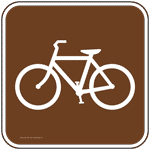 |  |  |  |
| Bike Trail Sign | Evacuation Sign | Railroad Crossing | Speed Limit 20 |
Browse Transportation Safety and Traffic Control Signs
Traffic Sign Shapes Also Have Meaning
The shape of a sign can provide a clue about its message even before you can read the content. Different types of signs have different shapes. An octagon means stop. An upside-down triangle means yield. A diamond shape warns of possible hazards ahead. Pentagon-shaped signs indicate a school zone. Round signs indicate railroad crossings.
While these color and shape rules generally apply, there are some exceptions based on the specific type of sign. For example, the railroad crossbuck sign is not circular, but its meaning is still clear.
In addition to color and shape, roadway signs must also meet specific size and material requirements set by the MUTCD. This ensures consistency and visibility. Retroreflective materials or lighting help illuminate signs that need to be visible at night.
Despite these standards, there are instances where custom traffic signs are necessary to convey unique messages effectively. Custom signs are often found in parking areas where vehicle control is essential.
Roadway Sign Symbols
Now that you know the basics of traffic sign meanings, let’s look at the symbols found on road signs. As with sign colors, the Federal Highway Administration dictates road sign symbols.
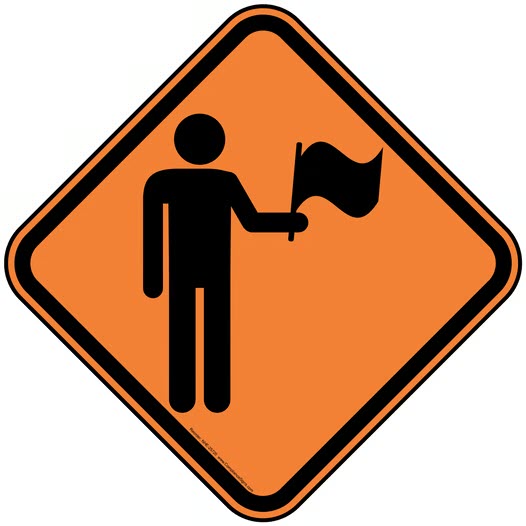
Flagger Ahead
This symbol indicates the presence of workers in the vicinity. It is primarily used in temporary traffic control settings such as construction zones.
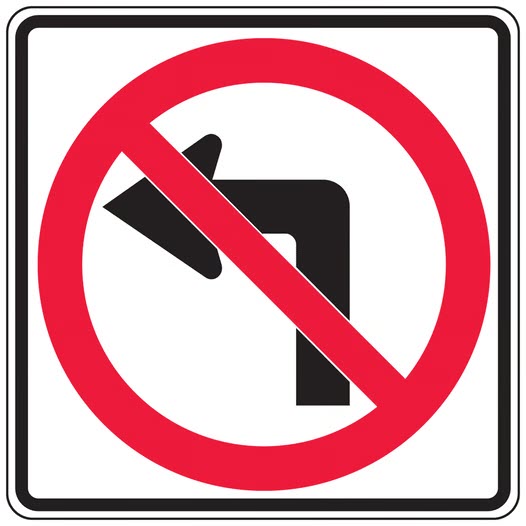
No Left Turn
This symbol shows drivers that left turns are not allowed, providing guidelines and restrictions for compliance with traffic laws.
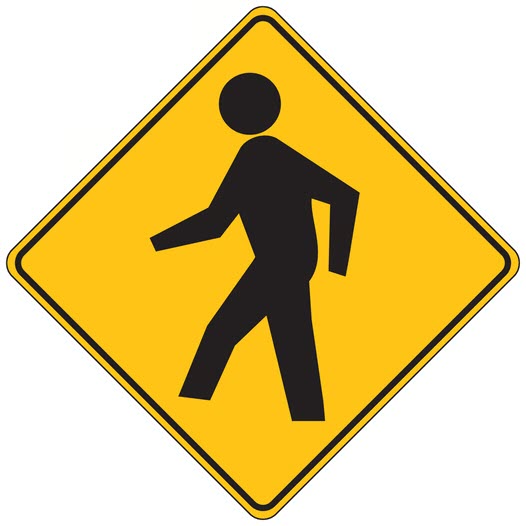
Pedestrian Crossing
This symbol signifies the potential presence of pedestrians crossing the road, ensuring the safe flow of traffic at designated locations.
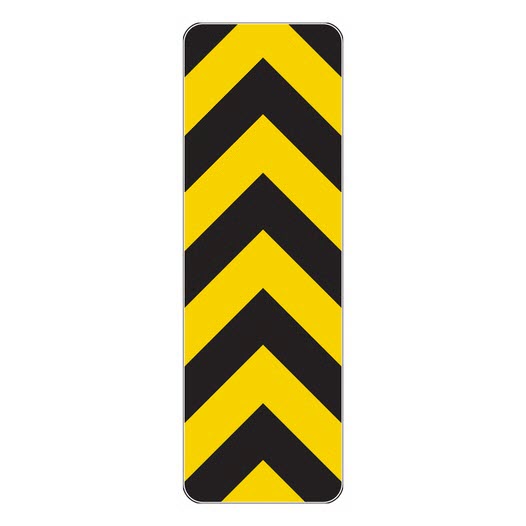
Object Marker
Reflective diagonal yellow-and-black stripes indicate an obstruction or object in the roadway, such as a support pillar under a bridge, maintaining safety standards as per MUTCD guidelines.
These are just a few examples of traffic control signs and their meanings. Understanding traffic signs is crucial for every driver to ensure safety on the road. Learn more about MUTCD-approved roadway signs and their meanings with the resources below.
Common Categories of Traffic Signs
Traffic signs generally fall into several major categories:
- Regulatory signs communicate laws and traffic requirements, such as stop signs, yield signs, and speed limit signs.
- Warning signs alert drivers to hazards, roadway changes, intersections, pedestrian crossings, and construction zones.
- Guide signs provide directional information, route guidance, destinations, and services.
- Work zone signs help direct traffic safely through temporary construction and maintenance areas.
- Parking and traffic control signs regulate vehicle movement and parking activity in lots, garages, campuses, and commercial properties. These include parking restriction signs, directional signs, reserved parking signs, and custom parking signs designed for site-specific requirements.
Understanding these categories makes it easier to recognize unfamiliar signs and respond appropriately while driving.
Road Sign Resources
- Manual on Uniform Traffic Control Devices (MUTCD)
- Federal Highway Administration
- Sign Visibility Requirements (pdf)
- Traffic Control Signs at ComplianceSigns
- Essential Parking Lot Signs for Safety and Compliance
- Roadway Transportation Signs
Understanding traffic sign colors, shapes, and symbols helps drivers make safer decisions and comply with roadway regulations. Whether you’re managing a parking facility, transportation network, work zone, or private roadway, standardized traffic signs play an important role in improving safety and traffic flow. Browse our traffic control and roadway transportation signs to learn more about MUTCD-compliant traffic signage.