

 OSHA & ANSI Headers
 Safety Tags
 Parking Signs
 Braille Signs
 Engraved Plastic Signs
 Create From Scratch
 Braille Sign Templates
 Engraved Sign Templates
 Pipe Markers & Labels
 NFPA 704 Hazmat Signs
 Blank Write-On Signs & Labels
 EZ Make Printable Products
 Banners
 Floor Signs
 Projector Signs
 Tags
Tags
 Labels
 Digital Signs
















Grain Bin Safety Tips to Protect Workers
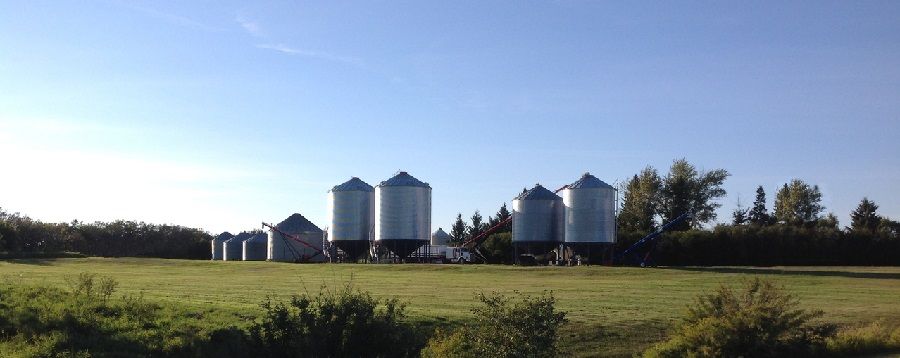
Dozens of workers lose their lives or are injured in preventable grain bin incidents every year. Grain handling is a high hazard activity where workers can be exposed to numerous serious and life threatening hazards. These hazards include:
- Fires and explosions from grain dust accumulation
- Suffocation from engulfment and entrapment in grain bins
- Falls from heights
- Crushing injuries and amputations from grain handling equipment
The U.S. saw a 26% Increase in grain entrapments from 2023 to 2024. And 41% of total grain entrapments in 2024 resulted in death.
“Far too many preventable incidents continue to occur in the grain-handling industry,” said Kim Stille, OSHA’s regional administrator in Kansas City. “Every employee working in the grain industry must be trained on grain-handling hazards and given the tools to ensure they do not enter a bin or silo without required safety equipment.”
“They must also take all necessary precautions – this includes using lifelines, testing the atmosphere inside a bin and turning off and locking out all powered equipment to prevent restarting before entering grain storage structures,” said Stille.
Stand Up 4 Grain Safety Week
Stand Up 4 Grain Safety Week is a springtime safety event that continues to grow and develop training and educational offerings, expand partnerships with industry organizations, and reach across the entire grain industry. The 2026 event will be held from March 30 to April 3.
The theme for this year’s Stand Up 4 Grain Safety week is L. E. A. R. N. – Listen, Explain, Ask, Remember, Notify. The L.E.A.R.N. acronym embodies the purpose behind Stand Up 4 Grain Safety Week. Learning is both active and interactive. Each word represents the action and interaction necessary to increase awareness, knowledge, and practices necessary to ensure a safe workplace.
2026 events include five virtual events:
- Monday – Kickoff livestream from the University of Illinois
- Tuesday – AM: From Flaws to Fixes: Working Safely When Design Creates Hazards; PM: (Spanish) – Grain Safety 101
- Wednesday – AM. Body Mechanics 101 – Ergonomics; PM Spanish
- Thursday – Critical Safety Devices: Check, Test, Inspect
- Friday – Effective Safety Training
Rescuers Face Severe Risks
Incidents in grain bins often result in multiple deaths when other workers attempt to rescue their coworkers and become trapped or overcome.
Pulling out a worker who is trapped in a grain bin requires a great deal of force, much more than is needed to rescue someone from under water. Grain resists the force a rescuer uses when trying to remove a buried worker. Rescue systems must be designed to overcome this resistance. A rescuer’s strength alone is not likely to be enough to rescue a trapped worker.
The control of worker’s exposure to hazards in grain handling facilities are addressed in the OSHA standard for grain handling facilities (29 CFR 1910.272). Other general industry standards also apply. These standards require employers to follow established, common sense safety practices when working in grain handling facilities.
Here are some grain handling safety facts and tips from OSHA and the Grain Handling Safety Coalition.
Grain Safety Facts
- The majority of engulfments occur when unloading equipment is running.
- Entanglement in PTO’s, augers, and other moving equipment is a leading cause of injury and death. Never remove safety guards, and keep them in good repair.
- Out-of-condition grain poses one of the greatest risks for entrapment/ engulfment. Crusted grain signals DANGER! You should normally sink about 12” (ankle deep) when walking on corn. If you aren’t sinking, get out! There is a high risk you will break through the crust and become entrapped or engulfed.
- The faster grain flows the faster you become submerged. Grain only needs to remove the body volume of a person to completely cover you. The average body volume is 5-7 cubic feet.
- It can take as little as 5 seconds to become totally engulfed. An average 10-inch auger unloading at a rate of 4,086 bushels per hour will completely engulf a person in just under 60 seconds.
OSHA Grain Bin Safety Tips and Employer Requirements
When workers enter storage bins, employers must (among other things):
- Turn off and lock out all powered equipment associated with the bin. Include augers used to move grain, so the grain is not being emptied or moving out or into the bin.
- Standing on moving grain is deadly; the grain can act like “quicksand” and bury a worker in seconds.
- Moving grain out of a bin while a worker is in the bin creates a suction that can pull the worker into the grain in seconds.
- Test the air within a bin or silo prior to entry for the presence of combustible and toxic gases, and to determine if there is sufficient oxygen.
- If detected by testing, vent hazardous atmospheres. Ensure that combustible and toxic gas levels are reduced to non hazardous levels, and that sufficient oxygen levels are maintained.
- Prohibit walking down grain and similar practices where an employee walks on grain to make it flow.
- Provide all employees a body harness with a lifeline, or a boatswains chair, and ensure that it is secured prior to the employee entering the bin.
- Provide an observer stationed outside the bin or silo being entered by an employee. Ensure the observer is equipped to provide assistance. Their only task should be to continuously track the employee in the bin.
- Prohibit workers from entry into bins or silos underneath a bridging condition, or where a build-up of grain products on the sides could fall and bury them.
- Train all workers for the specific hazardous work operations they are to perform when entering and working inside of grain bins.
- Ensure a permit is issued for each instance a worker enters a bin or silo. Certify that the precautions listed above have been implemented.
Grain Handling Safety Resources:
Visit the OSHA gain handling page for more information.
Download an OSHA grain bin entry fact sheet (pdf).
Participate in Stand Up for Grain Safety Week.
Review grain-handling safety facts from the Grain Handling Safety Coalition.
Learn about Farm Safety & Health Week.
Browse Grain Bin safety signs at ComplianceSigns.com.