
Heat Stress Posters and Signs for Heat Illness Prevention
Preventing heat stress during hot weather keeps workers on the job - and OSHA off your jobsite. Construction crews, warehouse employees, manufacturing workers, landscapers, and other outdoor or hot-worksite workers face the highest risk. They are most at risk for heat exhaustion, heat stroke, and dehydration.
ComplianceSigns heat stress posters, hydration reminders and LED temperature display signs help reinforce heat illness prevention training. Remind your employees to drink water, take breaks, recognize symptoms and work safely in hot environments. Display heat safety signs near entrances, break rooms, water stations, cooling areas, and jobsite trailers. Visit SafeWork Insider for heat stress prevention tips.
Need something else? Browse posters for: Workplace Safety, Safe Lifting, 5S / Lean, PPE or All Safety Posters.
Popular Heat Safety Posters and Signs:
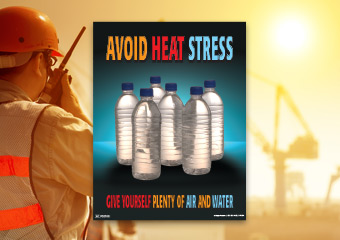
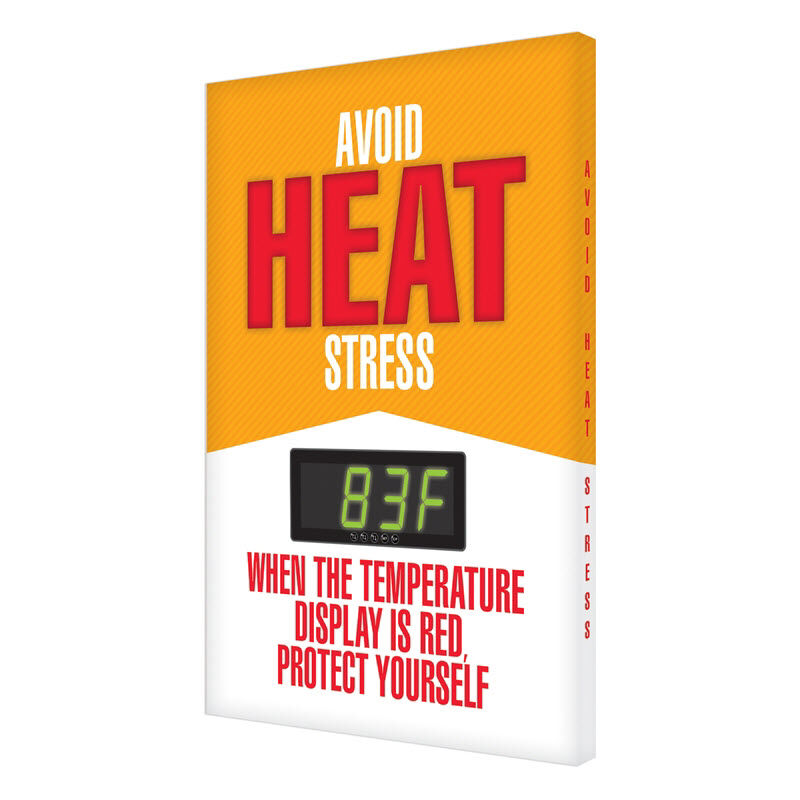
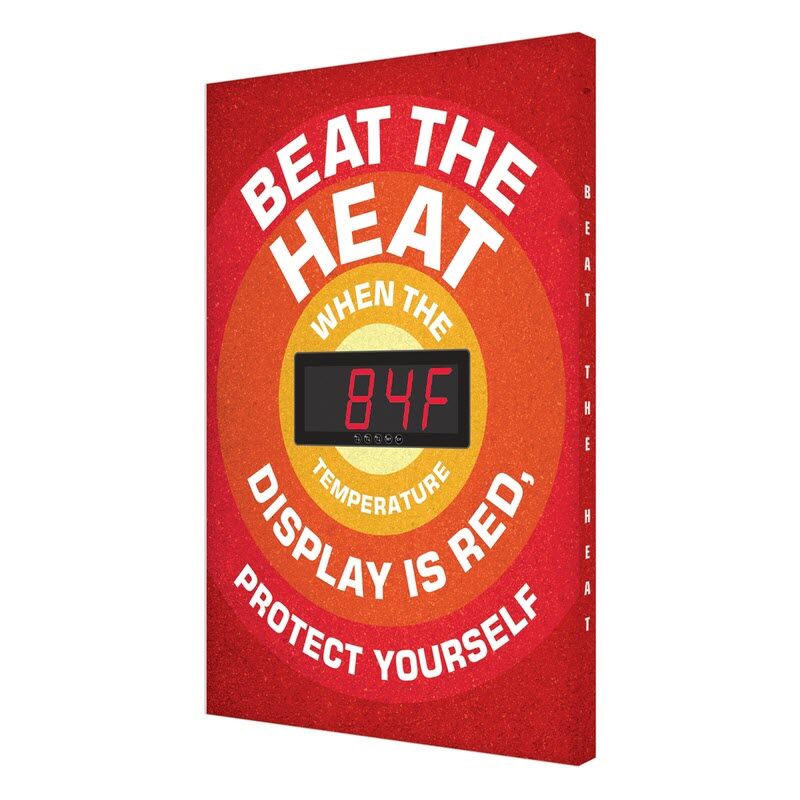
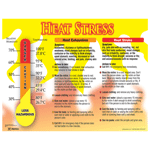
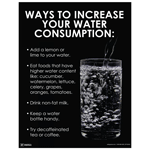
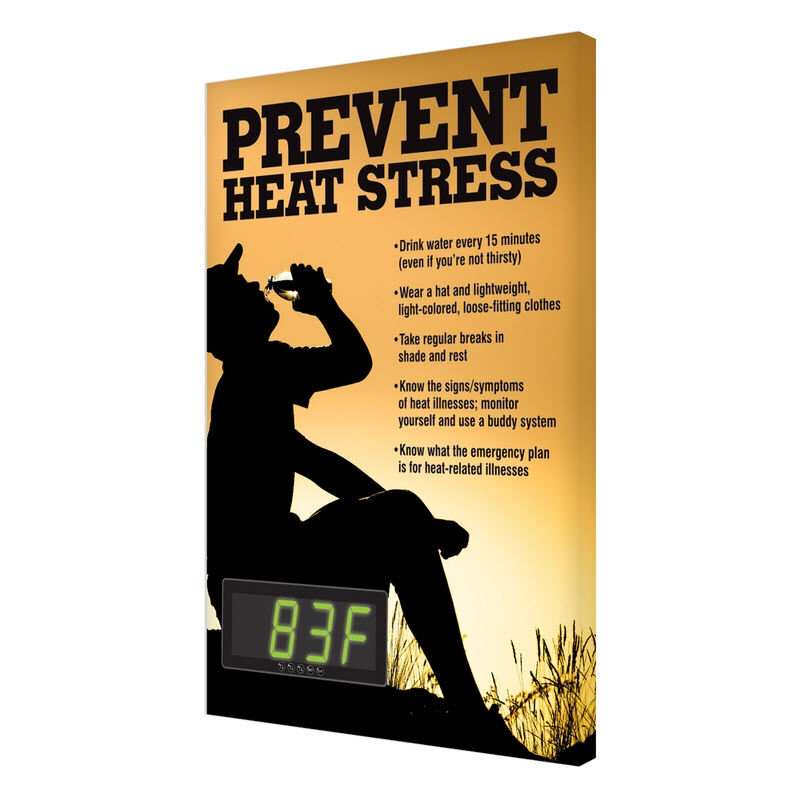
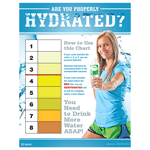
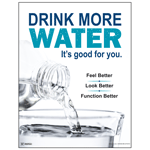
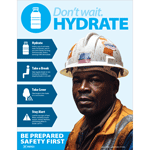
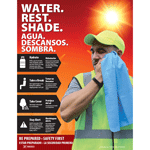
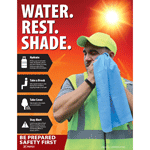

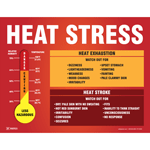


Make Heat Stress a Hot Topic at Your Workplace
Every year, thousands of workers become sick from occupational heat exposure, and some cases are fatal. Some states have specific heat exposure laws. Federal OSHA uses the General Duty Clause 5[a][1] to address heat exposure.
OSHA also has created a hot environments safety site and issued a National Emphasis Program on Outdoor and Indoor Heat-Related Hazards. All these factors make heat stress safety a critical topic for employers.
Heat stress, heat stroke, and dehydration often threaten construction crews, warehouse staff, and outdoor utility workers. Operating heavy machinery or performing physical labor in high temperatures makes heat-related illness particularly hazardous.
Why Your Worksite Needs Heat Stress Signs, Banners and Posters
Colorful, US-made safety posters from ComplianceSigns help workers understand the risks of heat stress and the steps they can take to avoid it. Workplace safety posters are one of the easiest and most effective ways to reinforce key safety messages at a time and place where they are most necessary. Heat stress signage:
- Brings attention to health issues caused by heat stress
- Addresses heat stress hazards
- Reinforces your seasonal safety training and guidelines
Heat stress hazards affect many industries where employees work outdoors or in high-temperature indoor environments, including:
- Construction companies
- Manufacturing facilities
- Warehouses and distribution centers
- Landscaping and lawn care businesses
- Agriculture and farming operations
- Utilities and public works departments
- Road construction and paving crews
- Oil, gas and energy companies
- Mining operations
- Transportation and logistics facilities
- Schools, parks and recreation departments
- Municipal and government agencies
Display heat illness prevention posters near entrances, break rooms, hydration stations, time clocks, cooling areas, job trailers and other locations where employees gather. This will maximize visibility and reinforce workplace safety training.
Choosing the Right Format for Your Job Site
Heavy-Duty Laminated Posters: Ideal for high-humidity warehouse floors, manufacturing plants, or short-term outdoor use where moisture, splatters, or dirt can damage standard paper.
English & Spanish Bilingual Signs: Crucial for diverse job sites to ensure every crew member understands hydration requirements, the "buddy system," and emergency steps.
Weatherproof Mesh Banners: Perfect for hanging on outdoor construction fences, providing bold safety reminders where workers are directly exposed to the sun.
Featured Heat Stress Signs and Posters
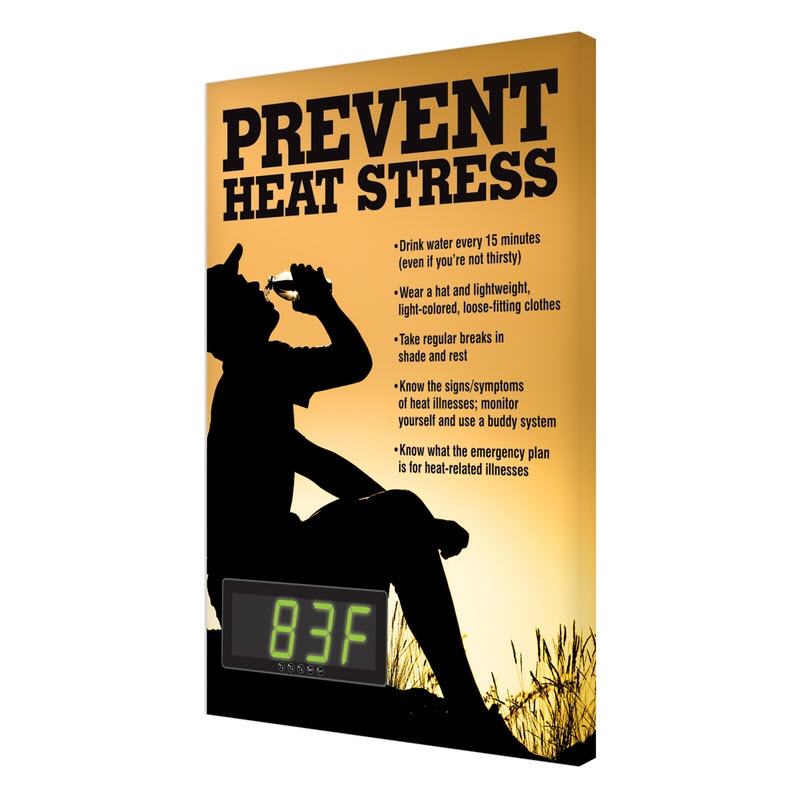
ComplianceSigns offers a wide selection of US-made safety signs designed to help employers reinforce heat illness prevention programs. Choose from posters covering topics such as:
- Heat stress awareness
- Heat exhaustion and heat stroke symptoms
- Hydration reminders
- Water, Rest and Shade messaging
- Bilingual English/Spanish heat safety posters
- Heat index and temperature awareness
- Digital LED temperature display signs
- Seasonal workplace heat safety reminders
Available in many sizes and materials, these workplace safety posters, banners, and signs share key safety information. They are useful in offices, warehouses, factories, construction sites, and other work settings.
What Is Heat Stress?
Heat stress occurs when the body is unable to cool itself effectively during work in hot or humid conditions. Physical exertion, high temperatures, direct sunlight, heavy protective clothing and inadequate hydration can all increase the risk of heat-related illness. Without proper precautions, heat stress can progress from mild symptoms such as muscle cramps and fatigue to serious medical emergencies including heat exhaustion and heat stroke.
Employers can help reduce the risk by providing water, rest breaks, shade or cooling areas, employee training and clear visual reminders throughout the workplace. Heat stress posters and safety signs reinforce these safe work practices every day by reminding employees to stay hydrated, recognize warning signs and respond quickly if someone begins experiencing heat-related illness.
Heat Stress Symptoms and Prevention
Recognizing the early signs of heat stress can help prevent more serious injuries. Common symptoms include:

- Excessive sweating
- Muscle cramps
- Fatigue or weakness
- Dizziness or lightheadedness
- Headache
- Nausea or vomiting
- Rapid heartbeat
- Confusion or disorientation
If symptoms worsen or a worker becomes confused, loses consciousness or stops sweating despite hot conditions, seek emergency medical attention immediately, as these may be signs of heat stroke.
Workplace heat illness can often be prevented through simple but effective safety practices, including:
- Drinking water frequently throughout the workday
- Taking scheduled rest breaks
- Using shaded or air-conditioned recovery areas
- Gradually acclimating new and returning workers to hot environments
- Wearing appropriate clothing for the job and weather
- Monitoring weather conditions and heat index forecasts
- Training employees to recognize and report symptoms early
Posting heat stress awareness signs and posters in high-visibility locations helps reinforce these safety messages and supports ongoing employee training.
Heat Safety Resources:
OSHA Overview: Working in Outdoor and Indoor Heat Environments
OSHA National Emphasis Program – Outdoor and Indoor Heat-Related Hazards (pdf)
Heat Safety Tips and Info at SafeWork Insider
CDC workplace heat stress recommendations
3 ways to make sure people read your posters
7 good reasons to laminate your safety posters
Heat Stress FAQs
What is the difference between heat exhaustion and heat stroke?
Heat exhaustion is a serious heat-related illness that can cause heavy sweating, weakness, dizziness and nausea. Heat stroke is a medical emergency in which the body's temperature rises rapidly and it can no longer cool itself. Heat stroke may cause confusion, unconsciousness or seizures and requires immediate emergency medical care.
What causes heat stress in the workplace?
Heat stress can result from high temperatures and humidity. It can also come from direct sun, hard work, or poor ventilation. Protective clothing and not drinking enough water are other causes. Indoor environments such as warehouses, foundries and manufacturing plants can also present heat hazards when temperatures rise.
What are the symptoms of heat stress?
Early symptoms of heat stress include excessive sweating, thirst, muscle cramps, fatigue, dizziness, headache and nausea. As heat-related illness becomes more severe, symptoms may progress to confusion, loss of coordination, fainting or unconsciousness. Workers experiencing severe symptoms should receive immediate medical attention.
How can employers help prevent heat stress?
Employers can reduce heat-related risks by providing drinking water, shaded or cooled rest areas, regular breaks, employee training and emergency response procedures. Acclimatizing new and returning workers to hot conditions and encouraging employees to recognize and report symptoms early are also important parts of an effective heat illness prevention program.
What is acclimatization?
Acclimatization is the process of gradually increasing a worker's exposure to hot conditions over several days or weeks. This allows the body to adjust to working in the heat and reduces the risk of heat-related illness, particularly for new employees or workers returning after time away.
Why are hydration reminders important?
Staying hydrated helps the body regulate its temperature and reduces the risk of heat-related illness. Hydration reminder posters encourage employees to drink water regularly throughout the workday instead of waiting until they feel thirsty. This is especially important during hot weather or physically demanding work.
Where should heat stress signs and hydration posters be displayed?
Place heat stress posters anywhere employees regularly gather or where heat hazards exist, including break rooms, hydration stations, entrances, locker rooms, jobsite trailers, manufacturing areas and cooling stations.
Why are bilingual heat illness posters important?
For workplaces with multilingual employees, bilingual posters help improve understanding, reinforce training and communicate critical safety information to a broader workforce.
Are heat stress posters required by OSHA?
Employers are legally required under the General Duty Clause to provide a workplace free from recognized hazards, including extreme heat. OSHA does not generally require specific signage, but the Water - Rest - Shade OSHA heat posters are part of its heat campaign.
However, many employers use posters and signs to reinforce safety training and communicate important prevention practices. OSHA emphasizes protecting workers from heat-related hazards through training, hazard recognition and prevention. Employers often use heat stress posters to reinforce employee training and support workplace safety compliance.